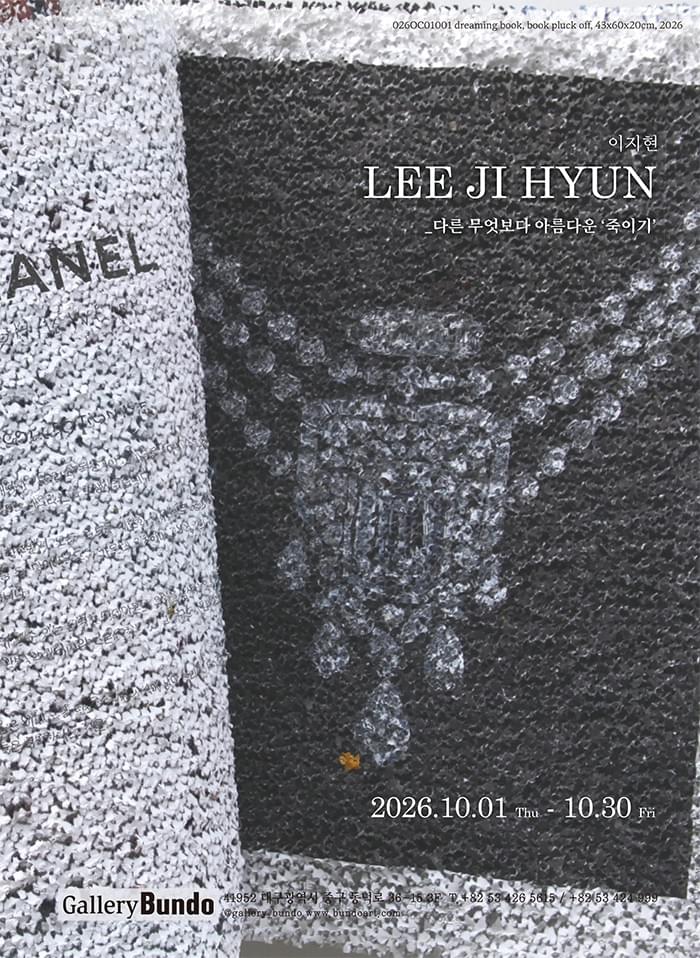
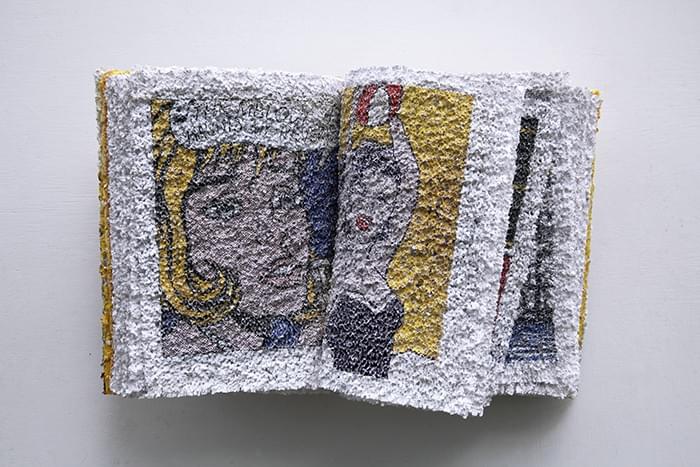
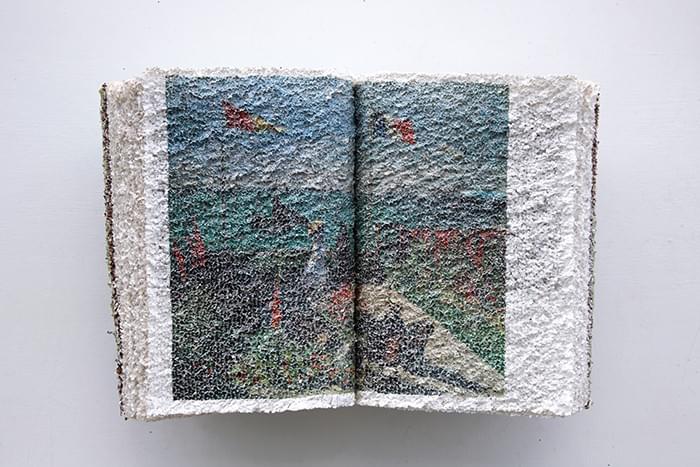
Lee Ji-Hyun's "Death More Beautiful Than Anything" showcases installations and book objects created through tearing and damaging the canvas' surface. On the surface, the artworks look like books but it is the rough texture and the harshness of the process that aims to convey the "beauty of damage". Books are seen as a symbol of timeless tradition and authority accumulated through eras and civilisations - some things remain forever, others last only for an era. Thus, tearing and damaging the books symbolises the changing world order and the evolvement of civilisations.
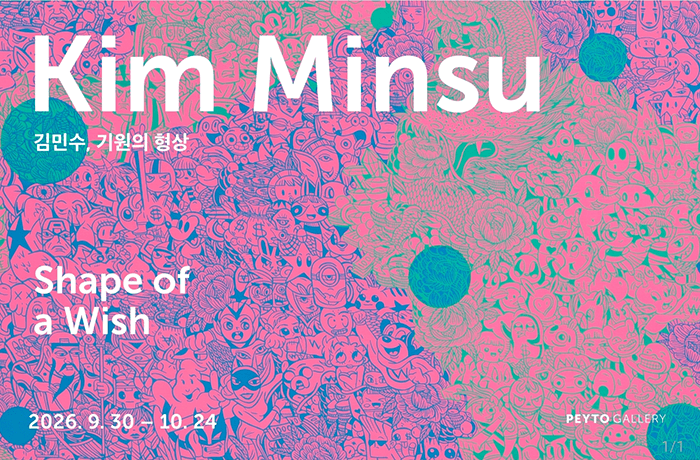
"Shape of a Wish" by Kim Min-Soo explores traditional folk paintings, talismans and auspicious symbols and their potential modern equivalents. In the past, various objects performed the function of talismans and were believed to bring luck or host deities who can answer prayers - what could be the modern analogues of those? The artist suggests that "modern heroes" such as Superman, Batman, Wonder Woman, and Astro Boy are the new images/souvenirs which bring us luck by inspiring us to be courageous, and just. These superstar superheroes are the new characters in collective imagination that we associate with the qualities needed to escape danger and in that sense, they could be seen as a modern-day analogue of ancient luck charms and of guardian icons that ward off evil.
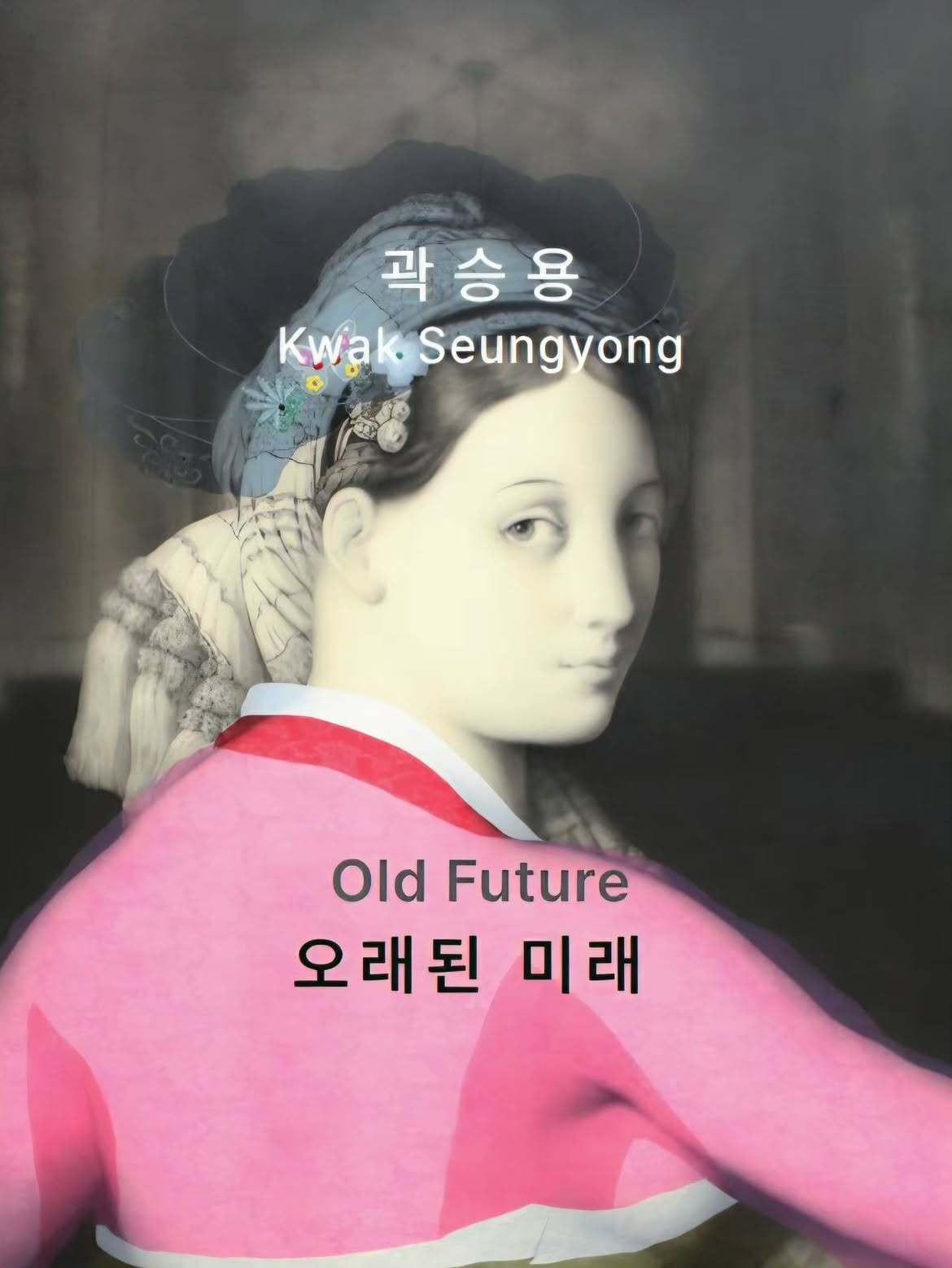
Kwak Seung-Yong's "Old Future" is an interesting intersection of East and West. For a base, the artist uses well-known images of women in classic Western masterpieces but dresses them in hanbok and offers us a new rendition of them. On his canvases, these familiar ladies are drawn in a style reminiscent of classic Asian works, mostly monochrome, with a hint of the ink-and-wash tradition.
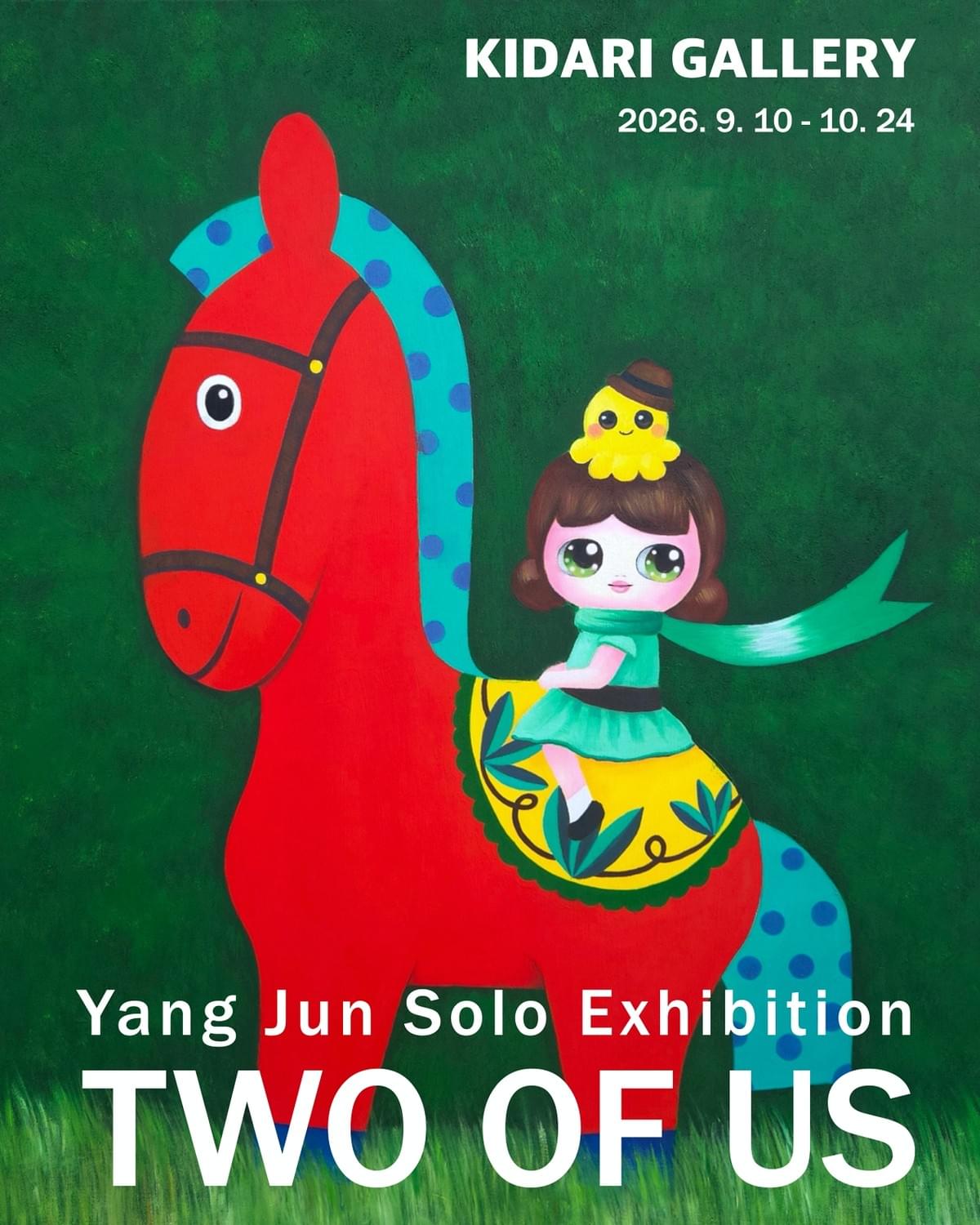
Yang Jun's "Two of Us" invites us to rediscover the beauty and harmony of peaceful coexistence with different peoples and creatures. Hana, the young girl and main character of the series, embodies the idea that humans and nature are interconnected. Duri, the octopus accompanying Hana, is also given a friendly human face to strengthen the same message. The exhibition is an invitation to connect with our childlike side and rediscover purity and playfulness.
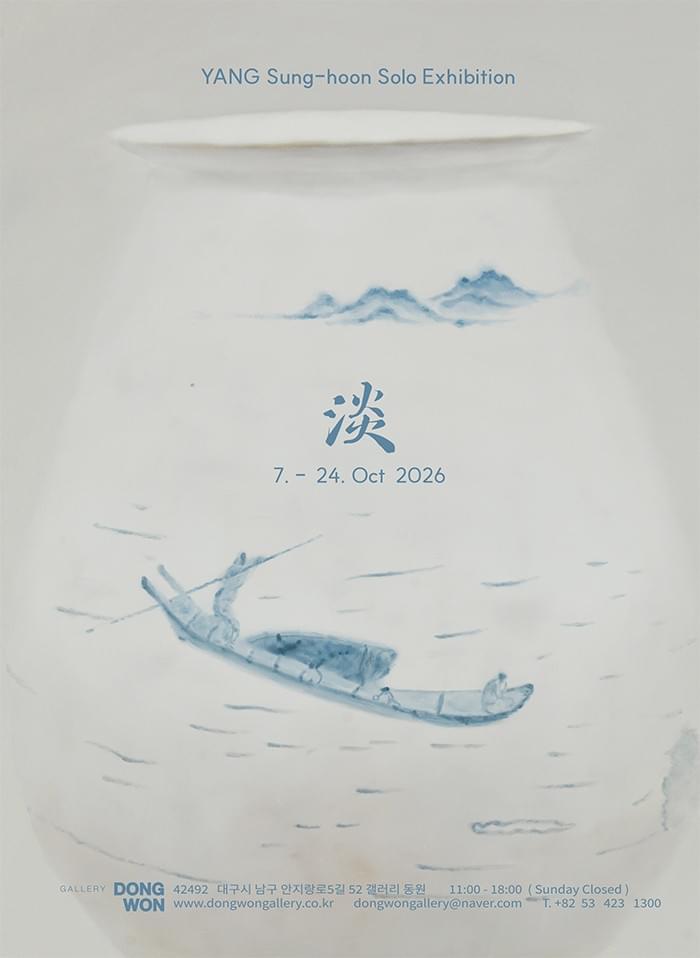
Yang Sung-Hoon's "Bright Light" is an ode to Chosun porcelain and the divine beauty/elegance of pure white. Moon jars are one of the key, timeless, classic symbols of Korea and particularly of the Chosun Dynasty period (1392 to 1897). Jars are considered to be first and foremost objects that hold things within them and therefore, a symbol of layered history and tradition. Beyond Korean history, white is related to Buddhism and the white lotus from where it also gains the meaning of religion, timeless wisdom, purity, clarity, justice, harmony and balance.
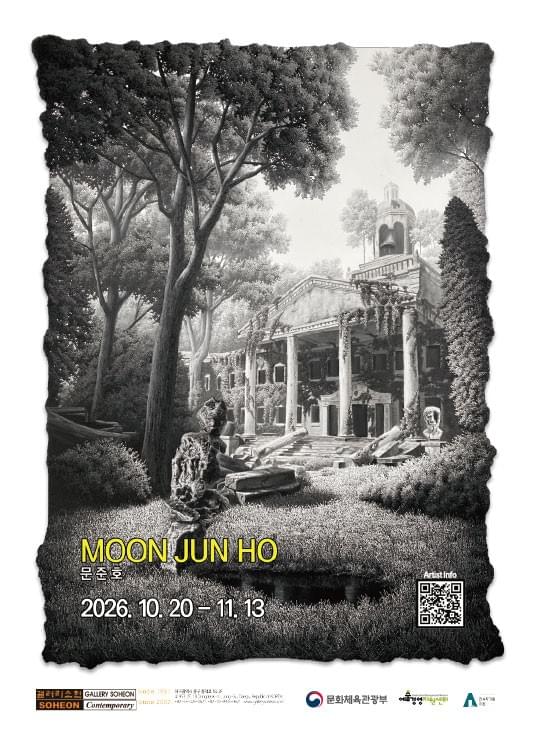
Moon Jun-Ho offers us strange and mysterious landscapes, utopian visuals crafted from dystopian materials. To convey his message, he uses silicone sealants (a symbol of modern society) on canvas as if they were acrylic paint. The final result is at the intersections of painting/sculpture and painting/photography. For the artist, silicone is a material that connects gloomy reality (the Industrial Revolution; coal-powered plants) with the romantic fantasies derived from it (civilisational, artistic and cultural progress) and thus, the perfect tool to strengthen his message.
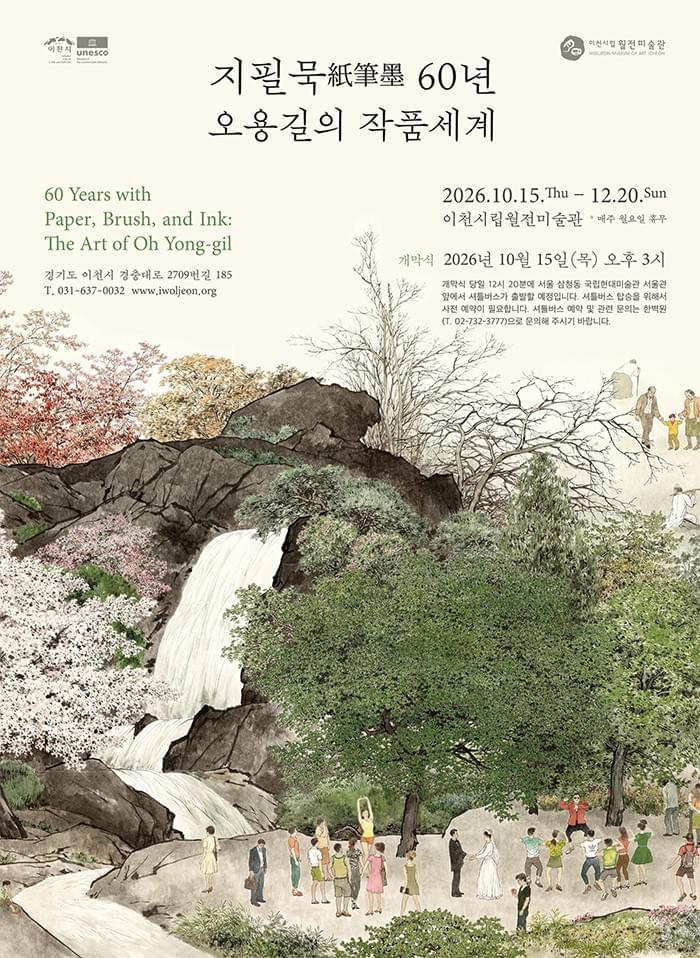
Icheon City Woljeon Art Museum is hosting "60 Years of Paper and Ink: The Art of Oh Yong-Gil", a commemorative exhibition of Oh whose career spans several periods of Korean art and political history. His art has reflected on a number of key topics such as the modernisation of traditional Korean art after the opening of the country to the West and the big changes in everyday life across the country as it was going through the rapid modernisation programme. This is one of many exhibitions in recent years dedicated to taking a deeper look at lesser-known Korean artists and to raising awareness about the richness of Korean fine art tradition among ordinary Koreans.
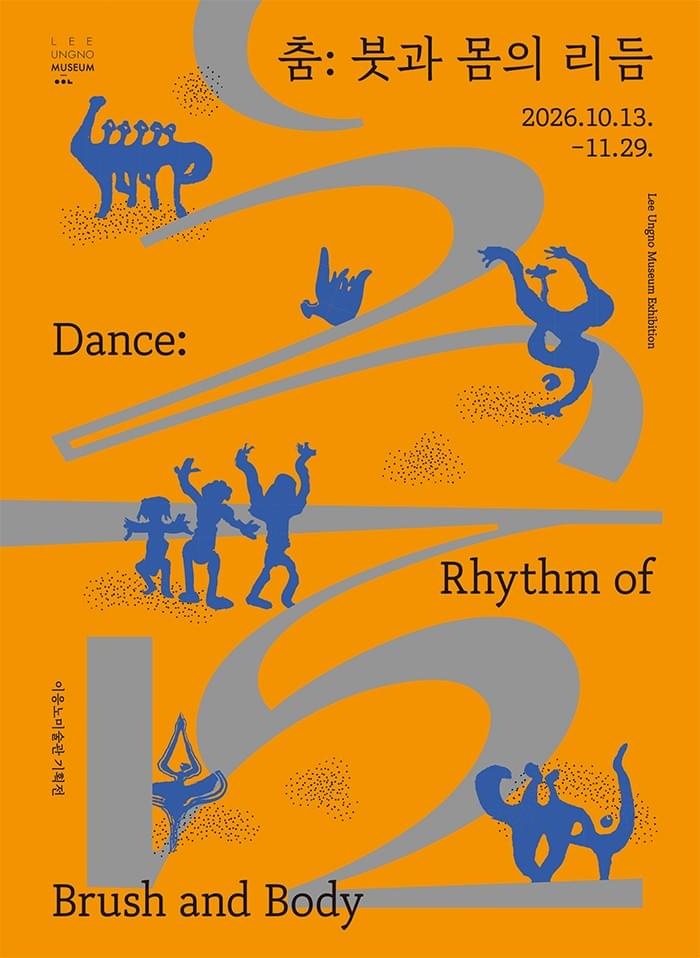
Lee Ungno's "Dance: Rhythm of Brush and Body" features 50 works by one of Korea's most famous contemporary artists. The focus is on his works treating the subject of dance and dancing. The selection showcases the artist's ability to capture the dynamism of movement with his brush and convey it convincingly on canvas. In the 1970s, experimenting with brushwork was the main focus of his practice and led to the creation of the so-called "dance paintings" on show in this exhibition. Of note, dance is intimately connected to religion and the movement of the Universe so it is a quite deep and symbolic subject in and of itself.
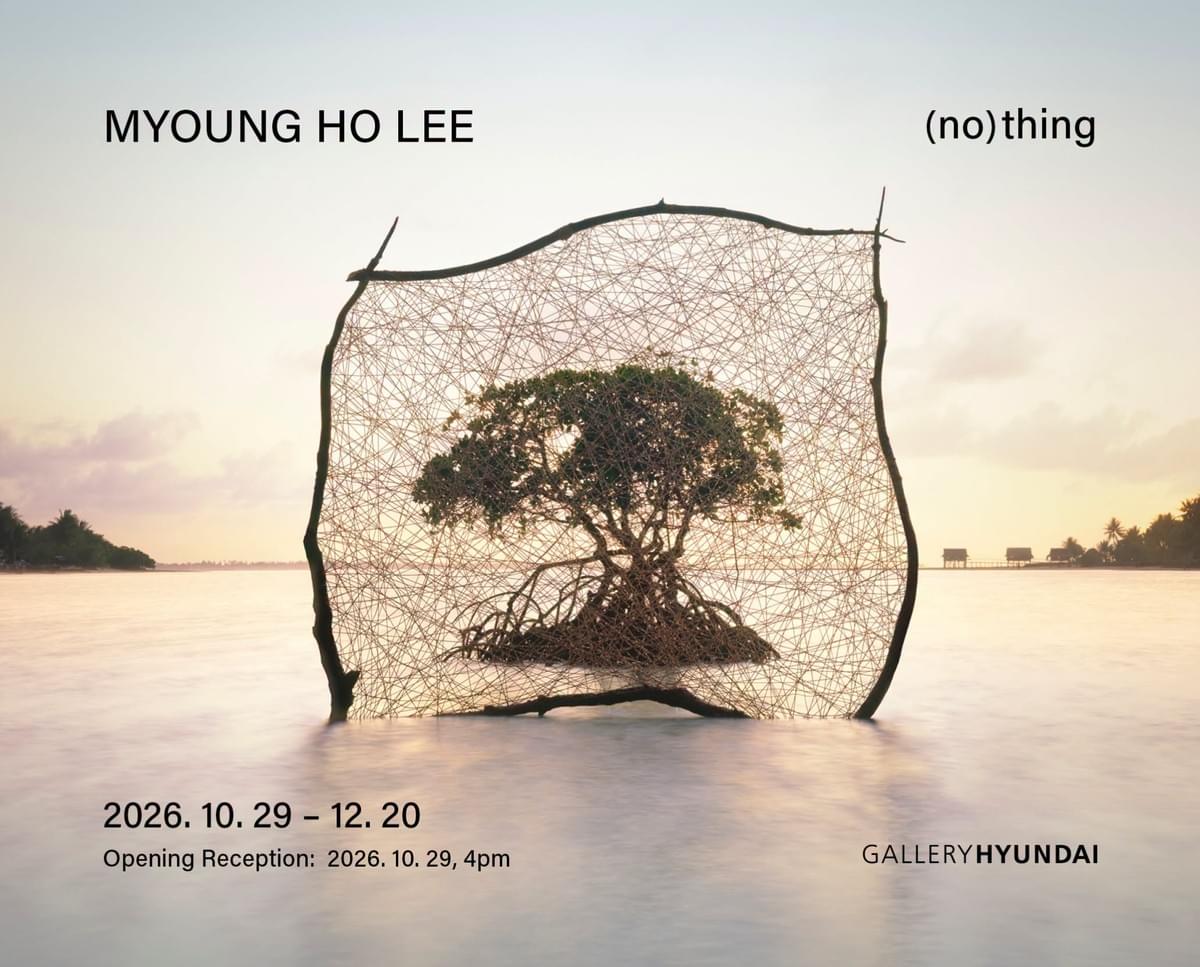
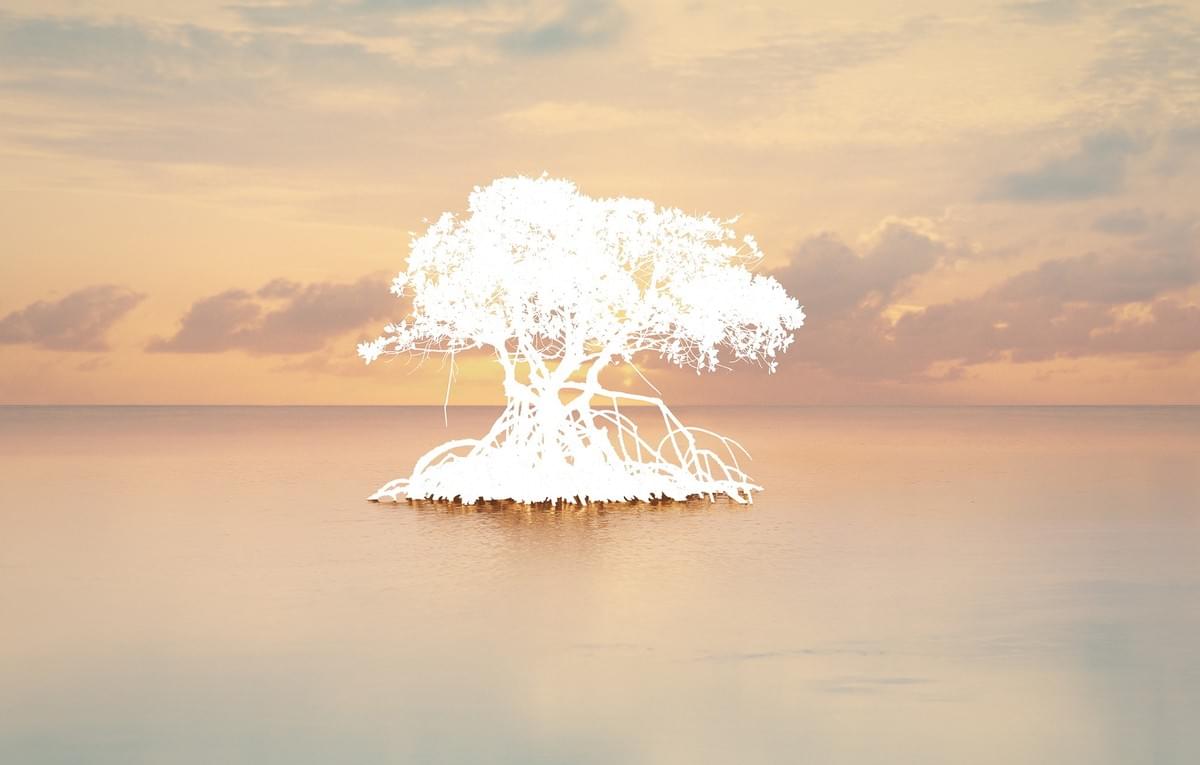
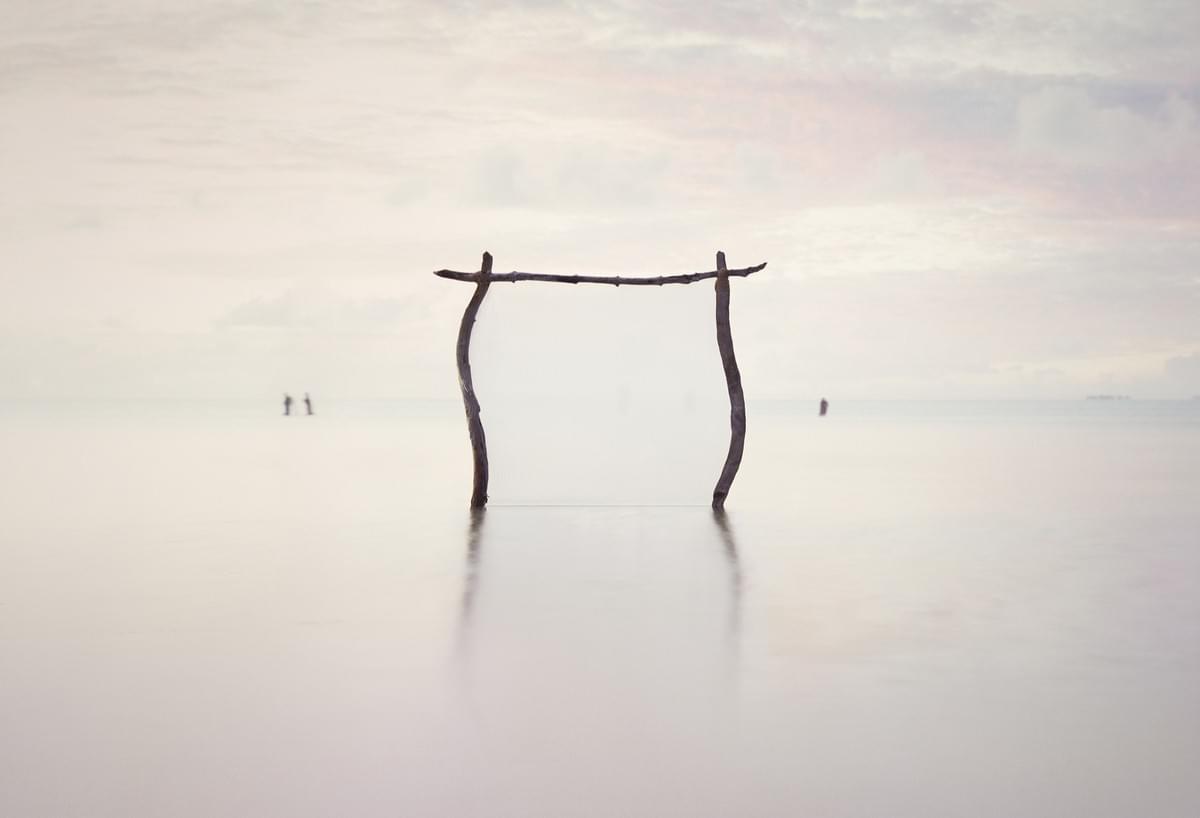
Myoung Ho Lee's "(no)thing" explores timeless dichotomies such as presence/absence, painting/photography but adds a slightly political twist to these topics: as sea levels rise and some islands are under threat of sinking, are we aware that an entire town/world will also disappear? Can we imagine that a piece of land which has been there for centuries will one day disappear? What will it feel like to wake up one day and see that a mountain is gone?